This Goes for Building a Business Too
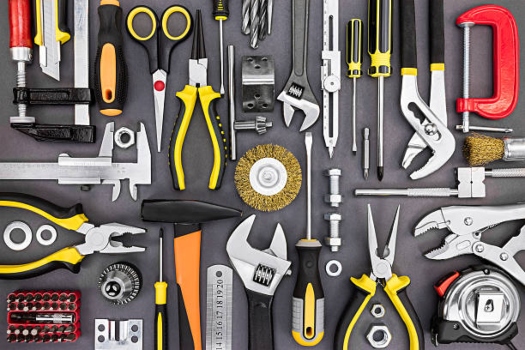
It takes a lot of different tools to build a construction project. Just think about it. There are tools for concrete work, framing, roofing, drywall, painting, flooring, and the list goes on. There are multiple tools used in each of these areas.
Think about how many tools are in your truck toolbox, your trailer, your shop, and even your tool belt. There are a lot of tools. And each of those tools serves a specific purpose.
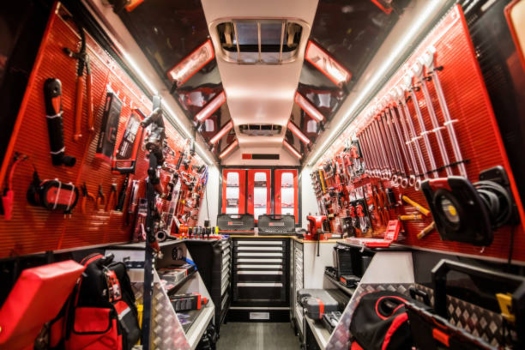
The same is true when building a successful business.
There are tools for sales, marketing, production, operations, financial, administration, planning, and organizing. Just like construction, each of these areas requires multiple tools to get the job done effectively.
Business tools are just as important as physical construction tools.
Most builders don’t see the business side of things as having the same value. I understand that because I’ve been there too. I think there are a couple of reasons for this. First, there is the physical aspect. You can easily see the value of a saw or a nail gun as the framing goes up. Second, it’s the nature of the business itself—it is a construction company after all.
But if you aren’t intentional about building the business, the construction part won’t last.
There are three main areas in a construction business that need constant attention if you want to keep things from crashing. Imagine your business sitting on top of a three-legged table. Each leg represents a different area of the business.
1. Sales and Marketing
This is the process of finding customers you can help and making them aware of your products and services. It includes word-of-mouth referrals, advertising, networking, meeting with potential customers, determining their needs, and preparing proposals and contracts.
2. Production and Operations
This involves organizing, scheduling, and managing projects or products. It includes determining who the right people are for specific tasks, making sure materials and parts are available, and maintaining communication among everyone involved.
3. Administration/Finance
This area includes preparing documents needed to communicate, track, and record all aspects of the business. It also involves managing income, expenses, banking, bookkeeping, and tax records. This is often one of the easiest areas for tradespeople to neglect.
The tabletop represents the big picture: planning and organizing. It’s what connects all three legs together. It’s easy to give too much attention to one or two legs while neglecting another.
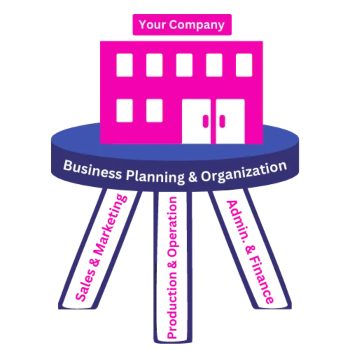
When any one of these legs becomes too short, the whole table starts to lean. If it leans too far, your business can come crashing down.
You might become so focused on the production that you forget to follow up with new customers. Or you spend so much time preparing proposals that you forget to send invoices. Or you work diligently on tracking expenses but don’t leave enough time to complete construction projects.
Some of the business building tools that help support these areas include:
- Proposals
- Contracts
- Proposed Change Orders
- Change Orders
- Payment Applications
- Payment Tracking
- Scopes of Work
- Production Budgets
- Savings Transfer
- Cash Flow Tracking
- Job Cost
- Proposal Tracker
- Production Tracker
- Profit Comparison
- Planning Journal
- Goal Setting and Tracking
- Daily Organization
- Prioritization
I know this seems like a lot. This is why so many builders ignore these tools and pick up a circular saw.
Over the next several weeks, we’re going to take a closer look at some of these tools, their purpose, why they’re important, how they work, and when to use them.

Just like construction tools are modified and improved through use and experience, business tools can be refined and improved as we learn more about what works.
That’s why next week’s focus will be on a tool that started as one solution, evolved over time, and is now being divided into two separate tools. We’ll look at how it changed and why.
Come back next week to find out more.
It you would like access to some of these business building tools, you can find them in our Business BUILDing Toolbox.
And if you have questions about business tools or building your business, you can schedule a 30-minute meeting. I’d be happy to help.