

It’s Also About Saving It
The past couple of weeks, we’ve been talking about money problems as they relate to self-employed businesses. The struggles like not getting paid by customers and not being prepared for unexpected equipment costs.
This week, Gene’s money problems go to a whole new level.
———
It’s March, and the past couple of months have been tough. After replacing the truck transmission and being shorted $1,000 by Mr. Adams for the garage windows, Gene feels stuck at the bottom of a muddy rut with no way out.
But even with all the problems, it’s not all bad. He’s had a lot of work in his first year of business, and some of the projects have been pretty profitable.
Having plenty of construction work is a good thing. After all, this is where the money comes from.
It’s spring, which means it’s time to start thinking about income taxes. Gene has always worked for someone else and has never had to file self-employment taxes. Not knowing how to do this, he needs to find an accountant to help him.

Gene calls his previous employer, Larry, and gets the name and phone number of the accountant Larry used—Jim Jackson with JJ Accounting.
Gene calls Mr. Jackson and explains his situation. He tells him that he used to work for Larry Morton and started working for himself a little over a year ago when Larry retired. Now he needs help preparing and filing his taxes.
The next afternoon, Gene sits down with Mr. Jackson. They discuss the process in more detail. Feeling proud of himself, Gene gives him copies of the information he managed to gather yesterday. Those feelings of accomplishment quickly fade when the accountant hands Gene a three-page letter of engagement, a five-page tax questionnaire, and a thirty-page tax organizer.
This whole tax thing is going to be a lot of work.
After a couple of weeks of gathering information and getting everything back to Mr. Jackson, Gene’s taxes are ready to be picked up.
When Gene arrives at the accountant’s office, the receptionist directs him to the conference room and motions for him to take a seat at the table. Jim comes in with a thick file folder in hand and sits down across from Gene.
Jim opens the conversation, “With this being the first time you’ve filed taxes as a business owner, it’s important that I go over everything with you.”
He opens the folder and hands Gene another stack of papers, thirty to forty pages tall and filled with titles like Federal Tax Summary, State Tax Summary, Depreciation Schedule, 1040 Tax Return, and Profit and Loss. None of it makes much sense to Gene.
Jim begins explaining each page and what they mean. As he goes through the numbers, Gene begins to feel a little nervous. Then Jim hands him the tax return to sign…
…and a voucher with $17,376.00 typed in the “Amount You Owe” box.
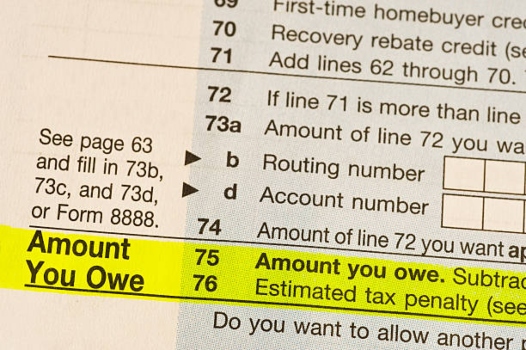
Gene sits quietly for a minute, trying to process that number. He looks up at Jim, clearly distraught. “I don’t have that kind of money. I can’t afford this! How am I going to pay it?”
“If you don’t have the money, then you’ll need to borrow it,” Jim suggests.
“I already borrowed everything I could to replace the truck transmission. I can’t borrow any more. I don’t know where I can come up with that kind of money. Are there any other options?”
Jim looks at him. “If you don’t have the money, the only other option I know is setting up a payment plan with the IRS. Of course, there will be penalties and interest owed.”
Jim pauses, then adds looking Gene in the eye, “That’s still better than pretending you don’t owe it.”
Jim pulls out another sheet of paper and hands Gene an invoice for $1,000. Gene gathers the paperwork and puts it back in the folder. As he writes the check out to Jim, he thinks, This is closer to what I thought the taxes would be.
After spending an hour with the accountant, it looks like Gene now has a new problem to solve: figuring out how to pay his taxes.

This business rut is really getting deep now!
After talking it over with Bonnie and his parents, they decide that setting up a payment plan is the only option. His parents offer to give him a couple thousand dollars for a down payment if needed. Gene thanks them for the offer, making it clear that if it comes to that, it will be a loan, not a handout.
Then Gene pulls together all his courage and calls the IRS.
The process is a nightmare. It takes weeks and involves filling out multiple forms, gathering more financial documents, and preparing additional reports. Eventually, everything is set up, and Gene now has a payment of $350 per month for the next 60 months. That’s five years and over $21,000 with penalties and interest.
This is not how Gene pictured the first year of his dream business.
The bottom of the rut is not just deep and muddy anymore; it’s gone!
Gene’s barely hanging on. It feels like he’s bracing himself against the walls of a deep ditch with no bottom, suspended in midair with no way out.
He asks himself, Why am I doing this? I could make more money and work fewer hours if I just went back to work for someone else.
———
I don’t know about you, but I can relate to Gene and his situation. Maybe that’s because Gene’s story is my story. I went through these same kinds of challenges early on in my construction business.
That’s why I developed the business building tools I use today. One of those tools is the Savings Transfer Tool. It was designed to help me prevent these problems before they ever happen.
I just wish I had known then what I know now.
And I wish there had been someone to help me.
That’s exactly why I created the Business Building Toolbox and offer coaching and consulting. If you’d like to learn more about the Savings Transfer Tool, join us for the Savings Transfer Tool Introduction on April 15th at 10:30 AM (CT).

When you attend, you’ll be entered into a drawing for one of two prizes:
- One for a customized Savings Transfer Tool implementation ($997 value)
- One for a full year subscription to the Business Building Toolbox ($297 value)
And if you want a quick snapshot of where your business stands today, take the 5-Minute Financial Health Review.