

The Money Rut Is Getting Deeper
Last week, we learned the importance of having money set aside when planned income doesn’t work out. Gene’s story begins with him driving his truck—the one he just got back from the mechanic. Today, you’ll learn why it was in the shop… and what that cost.
———
As Gene is on his way to pick up Darin that morning, the truck starts making a grinding noise and a vibrating. He sighs heavily, realizing it’s coming from the transmission. Lately, it’s been getting hard to shift the truck’s 5-speed manual transmission into second gear.
Things don’t get any better after he picks up Darin and drives to the job site. As they slow down to pull into the alley, Gene grabs the shifter to downshift to second gear. It doesn’t want to go. He reaches over with his left hand and, using both hands, forces the transmission into gear. But as they come to a stop to back up closer to the slab, it happens …

He can’t get the truck out of second gear!
He pushes, pulls, shakes, and swears as he tries to get the shifter into neutral. After a few minutes, he shuts the truck off and tells Darin, with a little more frustration than intended, to start unloading the tools and carry them across the job site to the slab.
Gene grabs the steering wheel with both hands and shakes it, squeezing it so hard that his knuckles turn white. Everything seemed to be going so well and now this.
The truck is one more problem on an already too long list.

He needs to get this garage framed. The customers are getting impatient, and Gene can’t blame them. He helps Darin carry the tools the 75 feet across the job site to the concrete slab.
But Gene can’t stop thinking about the truck problem as he nails boards together while Darin saws. Gene can’t stop thinking about what it’s going to cost to get the truck fixed.
Gene calls his friend David, who does mechanical projects as a hobby, to see if he could help him. David tells him he would love to, but he’s tied up with another project in his shop and it’s going to be there for a while.
This isn’t the news Gene was hoping for.
Gene then calls a mechanic that David recommended who says he can work it in. So, Gene calls the tow truck. Another unplanned expense.
By late afternoon, Gene gets a call back from the mechanic. The transmission needs to be replaced. It’ll cost $3,800, will take a week to get in, and then another few days to install it. That means no truck for more than a week.
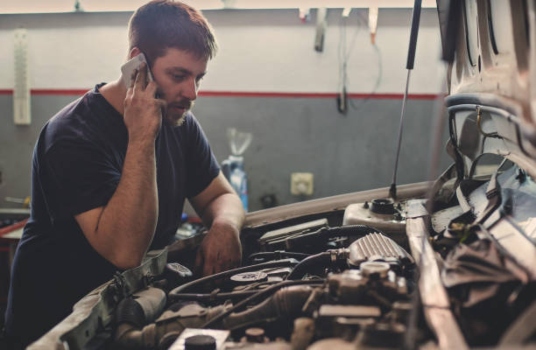
Gene tells him to go ahead and order it… even though he knows he doesn’t have that kind of money. Now, on top of everything else, he needs to figure out how to come up with the money for it.
Gene calls his wife, Bonnie, to see if she can give him and Darin a ride home. He explains to her that the truck has been towed and is at the mechanic shop.
On the drive home, Gene goes into more detail about the truck situation. He tells her the crane is scheduled to set the roof trusses tomorrow. If it has to be rescheduled, it’s going to be a couple of weeks before it will be available again.
“I can’t afford to wait,” he says. “I need to keep this job moving. Especially now with what it’s going to cost to repair the truck.”
Then he adds, “Since I don’t have a truck, I’ll need to use your car tomorrow. After the trusses are set, I’ll go to the bank and see if I can borrow the money to fix the truck.”
As he’s telling her this, it’s evident Bonnie is getting angrier. She’s squeezing the steering wheel so tightly with both hands, it looks like she’s going to pull it off the steering column.
Then she explodes. “And how do you propose I get the kids to daycare and to work without a car? Do you think we can just walk? You’re the one without a vehicle—why don’t you walk? I suppose you think what you’re doing is more important than what I am. I guess you just don’t think we’re that important.”
The next day, Gene goes to the bank. After a handshake and some cordial conversation, the banker leans back and says with an air of intimidation, “So you need some money to fix your truck. How much do you need?”
“$3,800,” Gene replies with some hesitancy. Then he adds, “I need it fixed. This truck is an important part of my business. I use it to haul tools, materials, and clean up job sites. If I had the money or could figure out another way, I wouldn’t be here.”
The banker listens with a skeptical look on his face, typing into his computer. The clicking of the keys only adds to Gene’s unease. Finally, after a few tense minutes, the banker looks up.

“Gene, your credit score isn’t great. Not to mention you still have a balance on your tool loan.”
“I know,” pleads Gene. “But if I don’t have a truck to haul those tools to and from jobs, I’m not going to be able to pay off that loan. Please help me so I can get my truck back.”
The banker pauses with some concern.
“Okay. We can give you another loan. But we’ll need the truck as collateral and have your wife as a cosigner.”
Gene feels a pit in his stomach. It feels like another nail has just been driven into the coffin of his business. Is this the solution or just another step deeper into the rut?
Gene goes back to the car in a bit of a haze. He’s not feeling great about this. “Sure, the truck needs fixed, but this means another monthly payment. How else will I keep the business going? Maybe I should see about getting a job.”
———
Unexpected issues can cause big problems, especially when money is involved. If Gene had money set aside for equipment repairs and replacements, this situation wouldn’t have felt nearly as overwhelming.
Saving money can be hard, but it’s far less expensive than borrowing it.

A Savings Transfer Tool can help you start building that cushion. It’s one of the tools included in our Business Building Toolbox.
If you’d like to learn more, join us for an Introduction to the Savings Transfer on April 15th at 10:30 AM (CT). If you have questions, you can schedule a free 1-on-1 meeting.
When you join the training, you’ll be entered into two drawings:
- One for a customized Savings Transfer Tool implementation ($997 value)
- One for a full year subscription to the Business Building Toolbox ($297 value)
And if you want a quick snapshot of where your business stands today, take the 5-Minute Financial Health Review.