
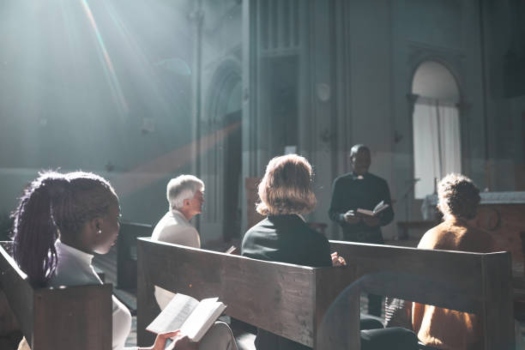
It’s a Place of Worship
This past Saturday, June 6, 2026, Pastor Lisa was ordained as an elder in the Global Methodist Church. At the beginning of the service, she came out dressed in a robe and sash—very formal and not her usual attire. She shared her experience from the day before. It was very traditional, high-church service.
Being ordained is a sacred rite within the Christian tradition, signifying the setting apart and consecration of individuals for specific roles within the ministry of the Church. This practice finds its roots in both the Old and New Testaments, where the laying on of hands and prayer are used to commission individuals for divine service.
The concept of ordination is deeply embedded in the Old Testament. In Exodus 28:41, God commands Moses, “After you put these clothes on your brother Aaron and his sons, anoint and ordain them. Consecrate them, so they may serve Me as priests.”
This act of ordination involved anointing with oil, symbolizing the Holy Spirit’s empowerment and setting apart for holy service.
Ordination holds profound theological significance within the Church.
It is not merely a human appointment but a recognition of God’s calling and gifting.
In 1 Timothy 4:14, Paul exhorts Timothy, “Do not neglect the gift that is in you, which was given you through prophecy when the council of elders laid their hands on you.” This passage underscores the belief that ordination involves the recognition and affirmation of spiritual gifts bestowed by God.
The ritual of ordination often includes the laying on of hands, prayer, and sometimes anointing with oil. These elements symbolize the transmission of spiritual authority, the invocation of the Holy Spirit, and the setting apart of the individual for sacred service. The laying on of hands, in particular, is a tangible expression of the Church’s recognition and support of the ordained individual’s ministry.
Those who are ordained are entrusted with significant responsibilities, including preaching, teaching, administering the sacraments, and shepherding the flock. In 2 Timothy 4:2, Paul charges Timothy, “Preach the word; be prepared in season and out of season; correct, rebuke, and encourage—with great patience and careful instruction.” This charge reflects the weighty responsibility borne by those who are ordained to lead and nurture the Church.
Ordination remains a vital and sacred practice within the Christian tradition, serving as a means of recognizing and affirming God’s call on individuals for ministry. Through ordination, the Church upholds the biblical principles of divine appointment, spiritual empowerment, and the orderly governance of the Christian community.
Pastor Lisa shared how they anointed her with oil and laid hands on her during the service. She also spoke about Exodus 29:1-37, where God explains to Moses how to ordain Aaron and his sons. It was also a formal ceremony. Everything was to be done according to God’s instructions, including the clothing, cleansing, sacrifices, and anointing.

Then, in Leviticus 8:1-9 and 22-24, Moses carries out the instructions God had given him. In verse 23, Moses places some of the blood on Aaron’s right earlobe, some on his right thumb, and some on the big toe of his right foot.
Why was this done?
- The ear is as a reminder to listen for God and obey His voice.
- The right thumb is a reminder to use our hands to do God’s work.
- The right toe is a reminder to walk in God’s path.
- The right side is significant because it is typically the dominant side—the side associated with strength. Our strength comes from God, and we are to give everything we have to Him.
This ordination took place at the Heartland Annual Conference, where conference business is conducted. Too often, conferences can be focused on work, procedures, and liturgy while losing sight of the bigger picture—the reason for it all.
It was reported that this conference felt more like worship than a business meeting. Those attending did not lose sight of the true reason for the gathering.
It’s important for us as Christians to remember why we gather. It’s also important to honor God and approach Him with reverence.
We need to remember to do both!